Friday, 17 June 2022

MANGO YOGURT


Mango Yogurt


Introduction:

Yogurt has been a part of the human diet for several millennia and goes by many names throughout the world. The word “yogurt” is believed to have come from the Turkish word “yoğurmak,” which means to thicken, coagulate, or curdle. While references to the health-promoting properties of yogurt date back to 6000 BC in the Indian Ayurvedic scripts, it was not until the 20th century that Stamen Grigorov, a Bulgarian medical student, attributed the benefits to lactic acid bacteria. Today, most yogurt is fermented milk that is acidified with viable and well-defined bacteria (Lactobacillus bulgaricus and Streptococcus thermophiles). While patterns of yogurt consumption vary greatly from country to country, consumption is generally low. In the United States and Brazil, for example, only 6% of the population consumes yogurt daily. Low consumption of yogurt represents a missed opportunity to contribute to a healthy lifestyle, as yogurt provides a good to an excellent source of highly bioavailable protein and an excellent source of calcium as well as a source of probiotics that may provide a range of health benefits. It is a source of several essential nutrients, including protein, calcium, potassium, phosphorus, and vitamins B2 and B12, and serves as a vehicle for fortification.

It is believed that milk products were incorporated into the human diet around 10 000–5000 BC, with the domestication of milk-producing animals (cows, sheep, and goats, as well as yaks, horses, buffalo, and camels). However, milk spoiled easily, making it difficult to use. At that time, herdsmen in the Middle East carried milk in bags made of intestinal gut. It was discovered that contact with intestinal juices caused the milk to curdle and sour, preserving it and allowing for the conservation of a dairy product for extended periods of time.

 Yogurt is made and consumed all over the world in the same style 

Indian Ayurvedic scripts, dating from about 6000 BC, refer to the health benefits of consuming fermented milk products. Today, there are more than 700 yogurt and cheese products found in Indian cuisine. For millennia, making yogurt was the only known safe method for preserving milk, other than drying it. Yogurt was well known in the Greek and Roman empires, and the Greeks were the first to mention it in written references in 100 BC, noting the use of yogurt by barbarous nations. In the Bible (Book of Job), Abraham owed his longevity and fecundity to yogurt consumption, and there is a reference to the “Land of Milk and Honey,” which many historians have interpreted to be a reference to yogurt.

It is believed that the word “yogurt” comes from the Turkish word “yoğurmak,” which means to thicken, coagulate, or curdle. The use of yogurt by medieval Turks was recorded in the books Diwan Lughat al-Turk by Mahmud Kashgari and Kutadgu Bilig by K. H. Yusuf, both written in the 11th century. The texts mention the word “yogurt” and describe its use by nomadic Turks. The Turks were also the first to evaluate yogurt’s medicinal use for a variety of illnesses and symptoms, such as diarrhea and cramps, and to alleviate the discomfort of sunburned skin.

Genghis Khan, the founder of the Mongol Empire, is reputed to have fed his army yogurt, a staple of the Mongolian diet, based on the belief that it instilled bravery in his warriors. In 1542, King Francoise I of France introduced this dairy product to Western Europe after being offered yogurt as a treatment by the country’s Turkish allies for bouts of severe diarrhea. It was later mixed with a variety of ingredients, such as cinnamon, honey, fruits, and sweets, and was used as a dessert.

It was not until the 20th century that researchers provided an explanation for the health benefits associated with yogurt consumption. In 1905, a Bulgarian medical student, Stamen Grigorov, was the first to discover Bacillus bulgaricus (now L. bulgaricus), a lactic acid bacteria that is still used in yogurt cultures today. Based on Grigorov’s findings, in 1909, the Russian Nobel laureate, Yllia Metchnikoff, from the Pasteur Institute in Paris, suggested that lactobacilli in yogurt were associated with longevity in the Bulgarian peasant population. At the beginning of the 20th century, yogurt became known for its health benefits and was sold in pharmacies as a medicine. Yogurt found commercial success when Isaac Carasso, from Barcelona, began producing yogurt with jams. After fleeing the Nazi occupation, Daniel Carasso, Isaac Carasso’s son, founded Dannon (Danone in France). The first yogurt laboratory and factory were opened in France in 1932; in the United States, the first laboratory and factory were opened in 1941.

Today, yogurt is typically milk that has been fermented and acidified with viable and well-defined bacteria, creating a thickened, often flavored, product with an extended shelf life. It contains essential nutrients and is a vehicle for fortification (added probiotics, fibers, vitamins, and minerals). It is also easily modified by sweeteners, fruits, and flavors to affect consistency and aroma. Yogurt can also be produced from rice, soy, or nuts.

Yogurt is an ancient food that has been a part of the human diet for thousands of years and has been promoted as a healthy food for much of that time. Low consumption of yogurt represents a missed opportunity to contribute to a healthy lifestyle, as yogurt provides a good to an excellent source of highly bioavailable protein and an excellent source of calcium as well as a source of probiotics that may provide a range of health benefits. Yogurt is not considered a snack or a sweet but rather a dairy food that can be consumed with any meal. It is rich in calcium and potassium, which is especially important for Asian, African American, and American Indian populations in which lactose intolerance dominates and is a deterrent to the consumption of dairy foods.

As we are going to prepare a flavored Yogurt with additions of a few ingredients o make it something special in taste and flavor but at the same time full of its nutritional values. Flavored Yogurt has become a household commodity these days and children love to have it. This product is easily available over the counter, prominent, or more popular among these flavors is Strawberry Yogurt, other than this, nearly every fruit flavor is available in the market which is a positive sign as it promotes the intake of dairy product that is full of Calcium. (I have already published the recipe for Strawberry Yogurt in July 2018 in this Blog, if you like, please go back to these pages.)

Come on now let us start making our very simple recipe of Mango Yogurt which is not only healthy but a treat to taste. So here we start with the name of ALLAH.


EQUATION:

Preparation time:                  30 minutes except for making Hung Curd
Expenses:                             400 Rupees (3 US Dollars)
Yield:                                     1-1/4 Kg of Delicious Yogurt


THINGS WE NEED:
  1.            1/2 Kg Fresh Mangoes 
  1.            2 Kg Plain Yogurt
  1.            1 Cup Sugar (Caster sugar is preferred)
  1.           A pinch of Salt
  1.            1/2 Teaspoon of Mango Extract (if you like the strong Mango  flavor)
  1.            3 tablespoons Gelatin Powder 
  1.            1/2 Cup Water


How to make our Yogurt

    • Put the Yogurt in Muslin cloth and hang for a minimum of 3 hours over a bowl (Overnight is recommended)
    • All its liquid will be dropped in the bowl and the cloth will hold the thick yogurt which is what we need. It is called Hung Curd.
    • The liquid can also be used as a delicious drink.
    • Put Gelatin Powder into the water and leave it for a minute then Microwave it for 30 seconds.
    • Put all things in a blender and blend well.
    • Pour this creamy mixture into a glass bowl and put it into the refrigerator till firm.
    • Before that decorate it with fresh Mango chunks or Jelly, and serve when firm and cold.


Hope this fruit Yogurt will win your heart as well as your appetite, this fruit yogurt can be made of any fruit you like with the same recipe. Prepare it for your loved ones without any FEAR OF FAILURE. Just try it.

I'd also like to add here that try experimenting in food preparation and forget a failure, no harm if you fail to achieve great results on the first try, you are not a trained Cook or a Chef. There is no harm in trying, think of achieving something novel. You'll be on top of the world if your experiment gets due success. No problem if it is not, because, you don't have to advertise your experiment beforehand. JUST DO IT, COME WHAT MAY. Make this recipe with your favorite fruit and see for yourself how easy it is!

There are always new horizons to be reached. Be the first and defeat the FEAR forever.


Thanks

thine eternally,

NOVICE


Sunday, 30 January 2022

COCONUT BUNDT CAKE


COCOANUT BUNDT CAKE


SOMETHING ABOUT COCONUT


The earliest mention of Coconut is found in "One Thousand and One Nights" story of Sindbad the Sailor. There is also a written record of Coconut in 542 BC. Marco Polo also mentions Coconut in 1280.

The origin of this Plant is now said to be the India-Indonesia region and it float-distributed itself around the World by riding Ocean currents.

Coconut is found mostly in tropical and subtropical areas, it's a pre-historic plant and Scientists believe that it has originated from South Pacific, what we now call New Guinea. 

Coconut Water can be used as a substitute for Blood Plasma. The Meat of this fruit is high in protein, and its milk is very refreshing and sweet. 


Coconut is used in many ways, as a drink, fruit to eat, and oil to cook as well as used in cosmetics, especially for hair treatment. 


Coconut can also be used as Mosquito repellant when its husk is burned and smoke comes out.

Coconut is the fruit of the Palm Tree, it has multipurpose usage and is one of the oldest species used by mankind. It is said that its name came from Portuguese explorers, the sailors of Vasco da Gama, who brought this fruit to Europe from India.

Every part of the Coconut Palm Tree is useful and people have taken full advantage of this gift from ALLAH. It gives Water, Milk, wine, oil, and its milk-white pulp. 

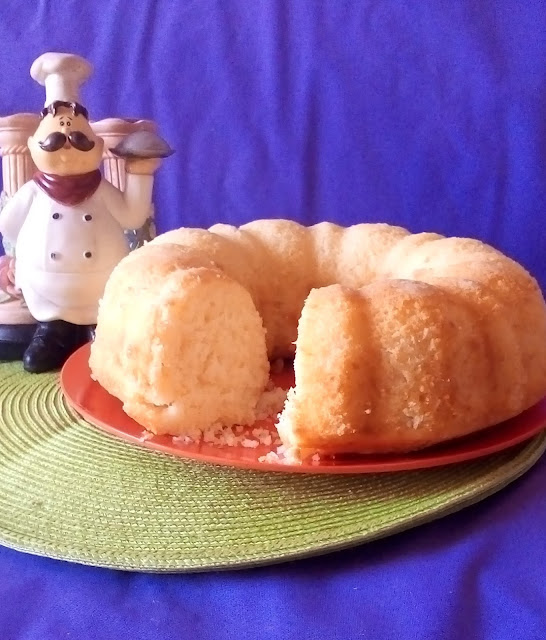
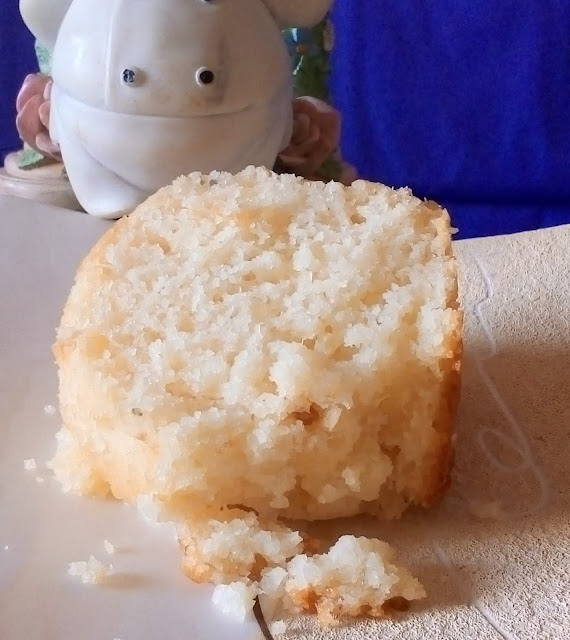
A cake made from Coconut pulp and milk has such a great taste, flavor, and aroma that one can never forget its first bite.


Making a Coconut Cake is not a difficult thing to do, it really is very simple and it tastes great. 

Here is the recipe for my viewers to make and taste this great cake.  I made it in a 9 inch Bundt Pan but you can make it in any pan of that size.

Let us start with the name of ALLAH.


EQUATION:

Baking Temperature:                       180 C, 350 F or Gas Mark 3 
Baking Time:                                   35-40 Minutes
Mixing Time:                                    15-20 Minutes
Expenses:                                        Rupees 250-300 (2 US Dollars)
Yield:                                                One 9 inch Bundt Pan Cake, enough for 9-10


WHAT WE REQUIRE: 

  1. 3-1/4 Cups All-purpose Flour
  2. 1/2 Cup Corn Flour
  3. 1 Cup Butter or Coconut Oil (any other vegetable oil can also be used)
  4. 2 Cups Sugar
  5. 6 large Eggs
  6. 1-1/2 Cups Coconut Milk
  7. 2 Cups Desiccated/grated Coconut
  8. 2 Teaspoons Baking Powder
  9. 1 Teaspoon Salt
  10. 1 Teaspoon Coconut Extract

FOR GLAZE:

  1. 1/4 Cup Coconut Milk
  2. 1 cup Powdered Sugar
  3. 1/2 Cup Toasted Coconut Flakes (Optional)


PREPARATION:

  • Preheat Oven to 180 C, 350 F, or Gas mark 4 for 20 minutes.
  • Grease and Flour the Pan (First smear the butter or oil on the bottom and sides of the pan and then sprinkle Flour over it and tap it to avoid extra flour)
  • In a wide bowl, sieve together the Flour, Corn Flour, Baking Powder, and Salt and set it aside.
  • Beat Butter or Oil and Sugar till becoming creamy.
  • Now Add Eggs one by one to the Sugar mixture and continue beating at a low speed
  • Add Coconut Extract and Coconut Milk.
  • Add dry ingredient mixture to the liquid mixture and fold it gently, also add the desiccated coconut at the same time
  • Pour the batter into the Cake Pan and bake it for 45-50 minutes.
  • Check by inserting a knife or a toothpick in the center of the cake and if it comes out a little moist then it means our cake is perfectly baked.
  • Don't wait for the knife or toothpick to come out dry and clean, it will make our cake a bit hard and not moist.
  • Please also note that the cake will ease the sides of the pan when fully baked.
  • Take it out and cool it on the Rack for about 20 minutes, feel its temperature, and then turn it upside down on any Platter.

FOR GLAZE:

  • Beat the Coconut Milk and Powdered Sugar together and pour this mixture on top of the cake.
  • Cut the desired pieces and enjoy the Tropical taste of Coconut.


Hope this Coconut Cake will become one of your favorite Cakes if you throw away the FEAR OF FAILURE. You only need to concentrate better than before when you start preparing this or any other cake. Just discombobulated the wayward thinking in about failure in your endeavors of working in the kitchen. 

The problem lies in our minds, which are switched off sometimes by ourselves and the only thing stored in it is negativity about everything. It may also be termed as combobulation, where you are in such a disoriented state of mind that you don't accept the reality and think only about how to avoid defeat or failure. This feeling consumes your positive energy and you are left with blankness.

It is nothing really if one fails to achieve the target at the first attempt, failure could work wonders if you are positive and it will help push you for more and more to achieve what you intended. So, please take your failures as booster shots and continue striving to reach the target.

Hope you are positive this time.


Thanks,


Love you all, 

thine eternally,

NOVICE

Saturday, 15 January 2022

Mayo Garlic Sauce


MAYO GARLIC SAUCE

(22.12.2021)


An Introduction to Mayonnaise:

Mayonnaise is a wondrous invention of Culinary history. It consists of eggs, vegetable oil, and an acidic liquid, usually vinegar or lemon juice, but in its finished form is nothing like any of those three.

This is true of lots of cooked foods, of course, but mayonnaise isn't heated, just mixed. (Although eggs used in commercial mayonnaise are pasteurized (heated),  to ward off salmonella.) In its mass-produced form, it is a durable source of creamy goodness compiled of a gratifyingly shortlist (for a mass-produced food) of reasonably wholesome ingredients. It must have been a great technological breakthrough in its day.

And surely it was. The standard creation story, as told on the website of mayonnaise market leader Hellman's, is this:

"Mayonnaise is said to be the invention of the French chef of the Duke de Richelieu in 1756. While the duke was defeating the British at Port Mahon, his chef was creating a victory feast that included a sauce made of cream and eggs. When the chef realized that there was no cream in the kitchen, he improvised, substituting olive oil for the cream. A new culinary masterpiece was born, and the chef named it 'Mahonnaise' in honor of the Duke's victory."

Mahon is on the now-Spanish Mediterranean island of Menorca. In 2010, food writer Tom Nealon dismissed this account as "ludicrous" and hypothesized that "salsa mahonesa" had evolved much earlier out of the ancient Mediterranean combination of garlic and olive oil is known variously as allioli, alholi, and aioli:

"Allioli had been around in the first century C.E., but it had always been extremely problematic - coaxing an emulsion out of oil, garlic, and salt is, it is almost universally agreed, nearly impossible. This process had remained a Catalan secret for millennia for just this reason - it could hide in plain sight because it was the culinary equivalent of black magic. What had apparently happened at some point (probably during the Renaissance) was that someone had added an egg and an acid to the recipe. This changed everything - anyone with the simple, if unlikely, instructions could now make this wonderful sauce."

While this blistering debate over the merits of mayonnaise reached its boiling point only in recent decades, controversy has haunted the egg-based sauce from the very beginning. However, originally the disagreement was not about whether the condiment was good or bad, but rather who could claim bragging rights—France or Spain.

One origin story, repeated in countless secondary sources, holds that the condiment was born in 1756 after French forces under the command of Duke de Richelieu laid siege to Port Mahon, on the Mediterranean island of Minorca, now a part of Spain, in the first European battle of the Seven Years’ War. The Duke’s chef, upon finding the island lacked the cream he needed for a righteous victory sauce, invented an egg and oil dressing dubbed mahonnaise for its place of birth. (Another version claims the chef learned the recipe from island residents.)

This creation tale came under assault a couple of generations later from a French gastronome who sniffed that Port Mahon was not exactly known for its haute cuisine. He felt Gallic provenance was more likely, and that the sauce might originally have been called bayonnaise after Bayonne, a town famous across Europe for its succulent hams. Other advocates of French authorship suggested the name came from manier, meaning “to handle,” or moyeu, an old French word for the yolk. By the 1920s, the Spanish were lashing back: a prominent Madrid chef published a pamphlet calling on his countrymen to reject the phony francophone term mayonnaise in favor of salsa mahonesa.

Present day food writer Tom Nealon emphatically endorses the Spanish view. “The fact that mayo doesn’t show up in any of the initial 17th centuries [French] recipe collections … does seem to confirm that the French didn’t have the ‘technology’ for mayonnaise until the 18th century,” he explained. But Andrew Smith, the author of several histories of mayonnaise, is not so sure: “All of the early recipes say, French. I believe it,” he said.

There is no question that the French popularized the sauce. Starting in the very early 19th century, the word mayonnaise (or magnonnaise) began to appear in German and British cookbooks dedicated to French cuisine. Talk of mayo quickly made its way to the United States, often on the lips of migrating French chefs, such that by 1838 the gourmet eatery Delmonico’s in Manhattan was offering both a mayonnaise of lobster and a chicken mayonnaise.

The salad provided the initial beachhead for mayo’s colonization of American cuisine. Beginning in the late 19th century, elite eaters went bonkers for mayo-drenched potato salads, tomato salads, and Waldorf salads, an elegant mélange of apple, celery, walnuts, and mayonnaise. The sauce was terrific for disguising flaws in vegetables, and its superior binding capacity made it a natural for sandwiches—mayo’s second great platform—which took off as a brown-bag lunch staple following the invention of the mechanical bread slicer in the 1920s. By 1923, the great white condiment’s star was rising so fast that President Calvin Coolidge was inspired to tell the press that the one treat he simply could not do without was his Aunt Mary’s heavenly homemade mayonnaise.

I've given here the introduction of one of the main ingredients of Mayo Garlic Sauce, which has now become a worldwide necessity of nearly every fast food, especially for those who are in the market commercially. Preparing your own sauce will give you great satisfaction and I am sure that you'll feel that the homemade Sauce is more healthy and nutritious than the store bought one.

The problem lies with our sedentary style of living, and the availability of everything over the counter, we just drive out to the store and fill our shopping trolley, not knowing how good these commercial products will prove for our elders and kids. Anyway, I must admit here that the Mayonnaise itself is not good for health and its use must be minimized. 

So, here we are, let us start preparing Mayo Garlic Sauce with the name of ALLAH.


Equation:

  1.  Total time..............................10-15 minutes
  2.  Yield......................................Enough for 8-10 servings
  3.  Expenses..............................Rupees 150/00 to 200/00 (About One US Dollar)


INGREDIENTS FOR GARLIC SAUCE:

  1.  1 Cup Fresh Cream
  2.  1 cup Mayonnaise
  3.  1 to 2 Tablespoons Garlic Powder (According to your taste)
  4.  1/2 Teaspoon White Pepper
  5.  1 Tablespoon Sugar (Can be increased according to your taste)
  6.  1 Tablespoon Chicken Powder
  7.  2 Tablespoons Lemon Juice
  8.  Salt to taste
  9.  1 Teaspoon Dried Oregano


Method:

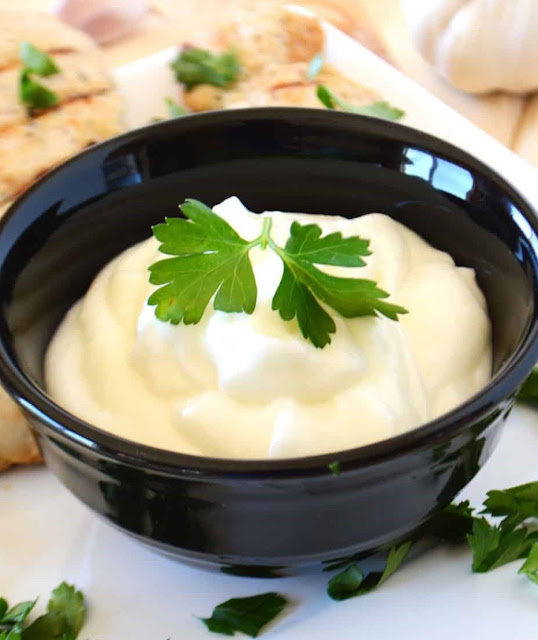
Mix all ingredients in a bowl, garnish with fresh coriander leaves or the green part of Spring Onion or fresh Coriander leaves.


Viewers and readers of my humble blog, I'd love to request you to please try making everything at your home by yourself to avoid getting malnutritious items from the market, especially for growing children who are always vulnerable to the glamour of advertisements and the commercialization of even the tiniest thing we are using in our kitchens. This is not rocket science that you are making your own homemade sauces, in fact, it is an achievement.
Please get rid of your FEAR OF FAILURE and start believing in yourself from now on. You can do everything which other people are doing.

Thank you, 

Love you all,

thine eternally,


NOVICE
 
Karachi, the 24th December 2021

Sunday, 9 January 2022

BAINGAN ACHARI


BAINGAN ACHARI
Brinjal Curry in Pickle Spice


Introduction to Achar Masala :

This flashy vegetable is eaten around the world, in Europe, the Middle East, and in Asia is a commonly used vegetable. Baingan, Brinjal, Egg Plant or Aubergine.

In Sub-continent, the essence of a delectable meal is incomplete without that little tangy and spicy thing called “Achar (Pickle)”. Interestingly, when it comes to our Sub-continent culinary heritage, pickles happen to be a quintessential part of our traditional dishes. Our love for pickles can be defined by the plethora of variants we have! In fact, every region has a unique variant of pickle, which has some of the other nostalgia which redefines the culinary journey of that delight.
 
The most delicious thing about every pickle is the spices. Spices can turn any fruit or veggie into a lip-smacking and aromatic pickle. The enchanting aroma and drool-worthy taste can amp up any bland and boring meal. But what do you do with the masala, when the pickle is over? For most of us, the answer is that you, throw it!

Have you ever thought of reusing this delicious amalgamation of spices to make your meals interesting! Well, if you haven’t then we have got some great ideas for adding a twist of taste to your meals with the pickle masala.

We all know how delectable achari bhindi and Aaloo fries are! In fact, there’s no better side dish than the crispy achari bhindi or achari sabzi. Well, have you ever thought of making with just one or two spoons of masalas from your leftover pickle bottle? Well, try it this time and you will be happy with the taste!

Well, if you are a rice lover then this combination is a must-try. Just add some veggies and stir fry and add a spoonful of leftover pickle masala, stir the mixture well and add cooked rice. Your delicious achari rice is ready.

How about making your sandwiches interesting by spreading this delicious pickle masala as a spread and making delicious Indian Style sandwiches or idli sandwiches for that matter. To accentuate the taste of your sandwiches, you can mix this masala with some pudina chutney and top it with some tandoori paneer or chicken to woo your loved ones with a delicious homemade sandwich

Fond of homemade chutneys and instant condiments, then you simply reuse your achar masala to make it more delicious. Just make a puree of your favorite chutney, while tempering your chutney, just add a spoon of leftover pickle masala rather than using amchur powder(mango powder) and lime juice, just a spoonful masala is enough to amp up the taste.

Yes, now you can amp up the taste of your boring curries and sabzis by adding a twist of achar masala and making them so delicious. The mix of spicy and tanginess will make your meal experience so good.

Add it like a filling or mix it with the ingredients, you can make delicious samosas and kachoris with the leftover pickle masalas. Add it in stuffing or knead it like a dough. No matter, how you make your delicacies will taste heavenly.

Now you can turn your boring parathas interesting, with the leftover pickle masalas. Just mix and finely mash the veggies and add a spoonful of pickle masala and indulge in those achari parathas. You can also make parathas by mixing the leftover pickle masala, you just need to add a spoonful of masala while kneading the dough, it has the right amount of oil as well as spice to make crispy parathas


Equation:

Cleaning and cutting:                  10 minutes

Cooking:                                      20-25 minutes

yield:                                            Enough for 4 persons

Expenses:                                    Rupees 100 (less than a US Dollar)


Required Ingredients:

  1. Baingan (Brinjals) cut in slices                 1/2 Kg.
  2. Oil                                                             2-3 Tablespoons
  3. Goal Mirch (Button Chilies)                      4-5 or to taste
  4. Namak (Salt)                                             to taste
  5. Kalonji (Nigella Seeds)                             1/2 Teaspoon
  6. Saunf (Fenugreek Seeds)                        1/2 Teaspoon
  7. Ajwain (Carrom Seeds)                            1/2 Teaspoon
  8. Rai Dana (Mustard Seeds)                       1/2 Teaspoon
  9. Amchoor (Dried Raw Mango)                   2-3 pieces
  10. Nibu (Lemon) Juice                                  1Tablespoon
  11. Kuti Lal Mirch (Red Chili Flakes)              as per taste


How to cook:

  • Wash and cut the Brinjals in  round slices of your choice size
  • As the Brinjals tend to go blackish due to oxidization and to avoid that, put the cut Brinjals in saltwater for 10-15 minutes. 
  • Heat oil in a pan for about 3-4minute and then put in button chilies, Fenugreek seeds, Cumin seeds, and Mustard Seeds, stir for about a minute, and then add the Brinjal slices.
  • Add salt, red chili flakes, Carrom seeds, and Nigella Seeds (Kalonji). Cook for about 10-12 minutes on medium heat.
  • Now add dried raw mango slices and lemon juice and cook till Brinjals become tender.
  • Put on the lid tightly and lower the flame to produce steam.
  • Garnish with fresh Coriander leaves Julien cut ginger, and Green Chilies cut lengthwise.
  • Enjoy with Naan or Chapati.


I am sure that this recipe of Brinjals cooked in pickled spice will soon be on your dining table and you'll be enjoying this heavenly vegetable with family and friends and savoring the pickled spice taste at the same time. Get on with it without any FEAR OF FAILURE. Make it and break the taboo of ifs and buts. thinking of failure and facing others who might not approve of your effort. Just think of it, who they are to judge you and your skills? Why do people discourage others on their simple endeavors and think of themselves as trendsetters or Jack of all trades to point fingers at those who are not aggressive and who simply wanted to please them with their little efforts?

Please, don't listen to them, don't pay any heed to their sarcastic remarks. It is your life and nobody has a right of discouraging you and pinch you. they must mind their own business. You do yours. Let us throw away our FEAR OF FAILURE in the Dead Sea and enjoy our life to the fullest.


Love you all,

Thine Eternally


NOVICE