Wednesday, 6 May 2020

PIZZA SAMOSA


PIZZA SAMOSA


AN INTRODUCTION OF SAMOSA


It is normally a deep-fried dish but can be baked as well. Samosa has various fillings with different spices and more common among them have fillings of Minced Meat or Potatoes. Nowadays Samosa is also made with a sweet filling, like sweetened Coconut flakes, Milk solids (Khoya) Almonds, Pistachios and Sesame seeds as well)

Its size varies in different areas but the basic shape is the same, which is triangular. The Samosa is a very popular street food used as an evening snack in Pakistan and India and also some other parts of the world like the Middle East, North and South Africa, America, and other countries. The spicy variety is more popular in Pakistan and India compared to other parts of the world.


The Samosa is said to be originated in the 13th and 14th centuries through the traders from Central Asia. Famous Scholar and Poet Amir Khusro (1253-1325) has written around 1300 that Princess and Nobles enjoyed this Samos during those days. Similarly, Famous Traveller and Historian Ibn-e-Batuta of 14th Century has also mentioned the consumption of Samosa during his days in the Courts.


It is certain that Samosa originated in Central Asia, where it was consumed way back during the 10th Century. It was called "Sanbusaj", "Sanbusaq", "Sanbusak" originated from Persian "Sunbusag".


With the passage of time Samosa came to be regarded as one of the most treasured & iconic culinary creation of the Sub-continent. It is now available all over the world reached the Americas and all other western countries and has been accepted wholeheartedly.

You can adjust the spices according to your taste by adding or subtracting the Red Chili Flakes and Chat Masala. Other spices must not be changed so that the taste and flavor remain as these have been made.

Pizza Samosa is a totally new and innovative concept in the Pizza family. As in Muslim countries around the world and especially in the sub-continent, Samosa is a favorite delicacy at Iftaar time during Ramazan Kareem. The idea of preparing Pizza Samosa was in my mind for a long time but always my lethargy kept me away from experimenting with it. Thanks, Allah, this time I took command over my laziness and I did make these superb, crispy, and spicy Samosas, filled with Pizza filling, and Lo & behold, what a result! It really surpassed all my expectations as my children loved these Samosas very much and started chanting "We want these daily now."

Let us start making/preparing our innovative Samosas with the name of ALLAH  and with the following ingredients.


EQUATION:

  1. Preparation of Pizza filling (Cutting & Cooking)      30 minutes.
  2. Filling the Wrappers with the Pizza Filling              30 minutes
  3. Deep Frying                                                           15 minutes
  4. Yield:                                                                    30 Samosas
  5. Expenses:                                                              Rupees 400 (Less than $3)


WHAT WE NEED FOR OUR SAMOSAS:

Note: (I have used Chicken Tikka flavor in fillings, other than the essential ingredients i.e. Pizza Sauce, Oregano & Cheese. It is up to you to follow or change the flavor of the filling. You can make any filling of your choice and taste.)

  1. 300 gms boneless chicken.
  2. 01 tablespoon Oil
  3. 2-3 Green Capsicums, finely chopped.)
  4. 150 grams finely chopped Cabbage.
  5. 2 tablespoons Tikka masala.
  6. Salt to taste.
  7. 1 Tablespoons Chat Masala
  8. 3 Tablespoons Kutti Lal Mirch (Red Chili Flakes)
  9. 1 Teaspoon Kali Mich Powder (Black Pepper Powder)
  10. 1 Teaspoon Oregano leaves or Powder.
  11. 3-4 Tablespoons prepared Pizza Sauce (Quantity can be reduced or enhanced as per taste)
  12. 3-4 Finely cut Hari Mirch (Green Chilies)
  13. 125 grams Mozzarella Cheese (Shredded)
  14. 125 grams Cheddar Cheese (Shredded)
  15. Oil for frying
  16. Samosa Patti (Wraps) as required.
  17. One beaten egg for binding the Samosas.


HOW TO PREPARE OUR SAMOSAS:

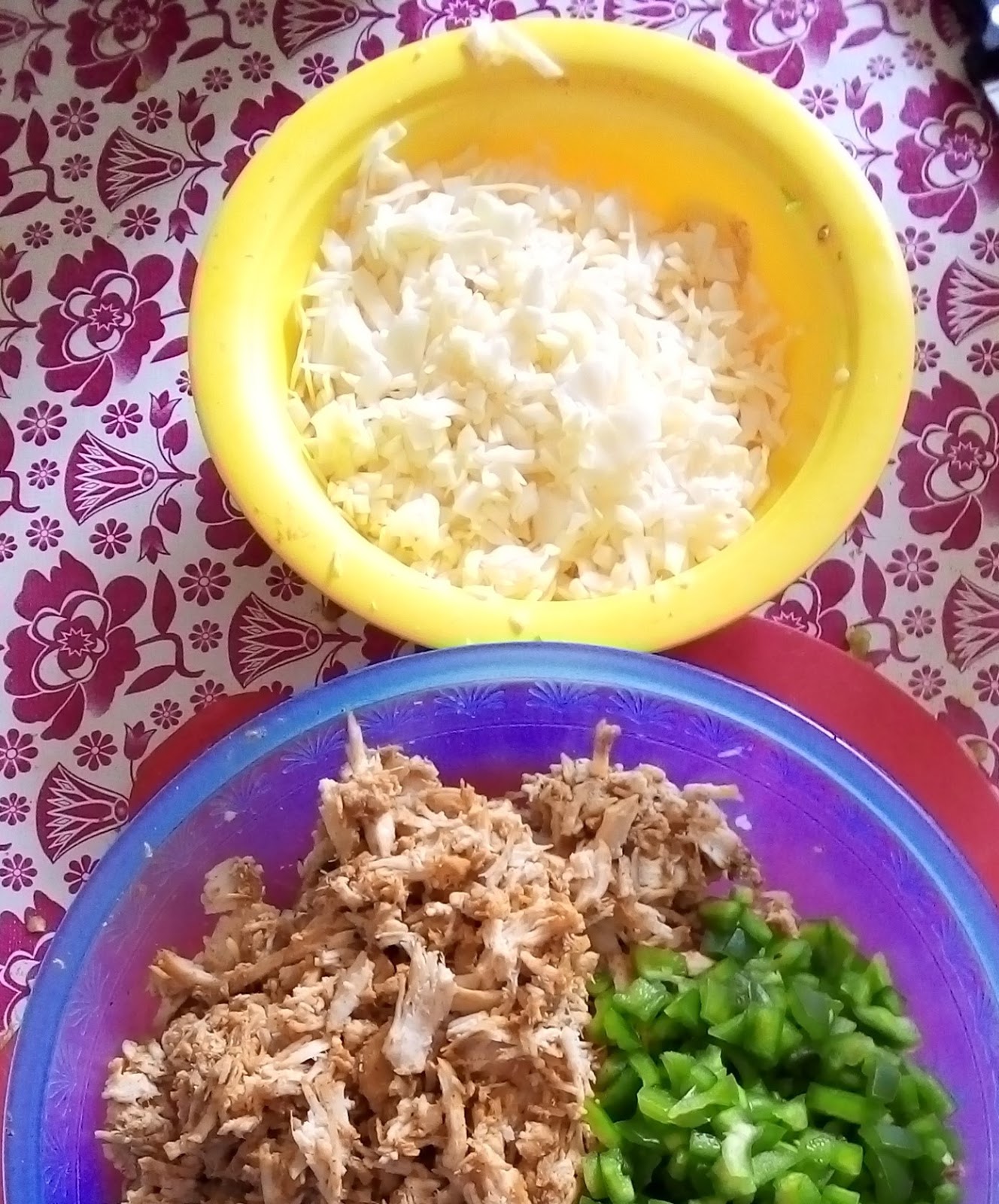
  • Wash the boneless chicken, drain the water, and put it in a pan with oil and cook till it is tender,
  • Add all the spices as given above and stir for a few minutes, & mix them well.
  • Take it off the heat and shred the chicken, mixing all juices in it.
  • Put it in a wide bowl and start mixing other ingredients, ie., shredded Cabbage, finely cut small cubes of Capsicum, Oregano Powder or leaves, Pizza sauce as per taste grated Mozzarella Cheese and Cheddar Cheese, and mix it well. The Samosa filling is ready now.

  • Prepare a binding paste with Maida and water or the best still, one beaten egg will work like Cement.
  • Take a Samosa Wrap and pull one corner of it to the downward position and on the side of Rectangular wrap, take another turn of the same and make a pocket, put the Pizza mixture in this packet with a spoon, drag the remaining part of the wrap over it and apply the beaten egg on its sides and press it to bind. 
  • (Please ask me without hesitation if the wrapping up of Samosa is difficult to comprehend, I'll then post a Pictorial or a Video of how to wrap and bind the Samosa)
  • You can freeze these unfried Samosas for at least a month by packing them in well-sealed plastic bags with the date of preparation mentioned over the pack. You can freeze the prepared Samosas by putting them in thick plastic bags, well sith the date of preparation mentioned over it for up to a month at least.
  • Heat oil in the wok till it is fully hot and then turn the flame to low-medium
  • Put in the Samosas and fry them Golden. Never over fry or make them fully Browned.
  • Place an absorbent paper on the platter and put the Samosas over it to drain the excess oil.
  • Enjoy having these Spicy & Crispy Pizza Samosas with my Special All-Purpose Chutney, Green Mint Chutney, or with Yogurt, or Tomato Ketchup.
  • Recipe of Mint Yogurt Chutney will follow.


I am sure that these spicy snacks will become a hit on your table with your family and friends. So get on with it without any FEAR OF FAILURE.


I am not hoping, but I am sure that these Samosaas will hit the Jackpot, anywhere, anytime. So, don't hesitate to try any novel idea, just do it without any FEAR OF FAILURE as this fear makes us live with the traditions only. Overcome your fear and think of doing something new every time you are up to satisfy your tastebuds and get appreciative words from family and friends.


 Thanks for your time.

Thine Eternally,

NOVICE
 

Sunday, 12 January 2020

GAJAR KA HALWA


GAJAR KA HALWA

(The Ultimate Winter Dessert)


Halwa finds its roots in the Arabic language and refers to many dense or compact desserts. Originally halwa was either flour-based or used various nuts with sugar, milk, and butter to create a nutty dessert. It is commonly believed that this kind of halwa was introduced to the settlers in India through trade with the Middle East and Asia Minor during the expansion of the Mughal Empire.


The shared food heritage between Pakistan and India is fascinating, we share the same food stories and love the same foods and can rightfully both lay claim to most foods as our own. This not only makes for a delightfully interesting dinner conversation with friends, but also makes for a common ground to share family recipes and stories.

Gajar ka halwa is a popular dessert all over Pakistan as well as in sub-continent  and often served at most festivals, in Weddings etc. This is a Winter dish and when the season starts with the fresh Carrots fill the Vegetable vendors, we also see many seasonal Vendors of this Halwa all over the country like Mashroom growth. Its aroma fills the streets where these eateries are located. Every Sweetmeat merchant or Mithai Wala prepares this Halwa like it is a religious entity. People really love this Halwa. The dish is popular among adults as well as children. In 300 grams of Gajar ka halwa, there are 268 calories (76 come from fat, 180 from carbohydrate and 16 from protein)

Gajar ka halwa also is known as gajorer haluaGajrela, and Carrot Halwa is a carrot-based sweet dessert pudding from the Indian sub-continent. It is made by placing grated carrots in a pot containing a specific amount of water, milk, and sugar and then cooking while stirring regularly. It is often served with a garnish of almonds and pistachios. The nuts and other items used are first sauteed in ghee, a South Asian clarified butter.

The dessert is traditionally eaten during all of the festivals in India, mainly on the occasion of Diwali, Holi, Eid ul Fitrand Rakhsha Bandhan. It is served hot during the winter

Who thought of adding sugar, milk, and ghee to carrots, simmering it until the milk dried and serving it as a delectable dessert? Legend has it that the Sikhs from Punjab introduced it to the house of the Mughals. The Emperors enjoyed its vibrant color, flowery aroma, and slightly chewy texture, and it gained popularity far and wide-spreading sweetness throughout the empire.


The Mughal Empire was spreading, and international traders were bringing in intriguing new goods for exchanges, barter, and purchase and the orange carrot is said to be one such treasure. Carrots were originally purple in color and were indigenous to Afghanistan for almost 5000 years. They came in colors such as red, yellow, black and white, but not orange, until the 17th century when the horticulturalists in the Netherlands decided to honor William of Orange, from the House of Orange, by creating an orange carrot. Though many believe that it was a coincidence; and the orange color was a mutation of the red and yellow carrot and had no significant link to the Royal House of Orange. This new orange carrot was sweeter, prettier and of a non-sticky variety, making it popular amongst the cooks.
The Mughal Empire was at its zenith, a dynasty that was splendid and modern and looking for a trade with the rest of the world. This orange carrot had already spread far and wide to Europe, Middle East, and of course now South Asia with the coming of the Dutch East India Company to the sub-continent in the 17th century.
The cooks in the subcontinent liked the newly imported carrot and the sweetness that came with it, and since it was an era when new cuisines were being developed by expert chefs and connoisseurs, this kind of carrot seemed to be of a perfect variety to be tried as the main ingredient in the halwa, with sugar, milk and butter, sans the flour and nuts.
The province of Punjab apparently took an instant liking to it and started developing innovative new recipes, sweet and savory. It was a vegetable that peaked as a winter harvest and its abundance in the glorious winters nudged the cooks to develop a hot delicious dessert best served any time of the day, before or after a meal, or as a side with Tea (chai or Doodhpati)Gajar ka halwa was an instant hit all over the Indian subcontinent, from pauper to prince.
Let us start preparing our Winter Delight with the name of ALLAH.


What we need for our Halwa:

  1. Grated Gajar (Carrot)            1 Kg
  2. Ghee (Clarified Butter)           250 Grams (Pure or Asli Ghee is preferred)
  3. Sugar                                     350 Grams
  4. Koya (Milk Solids)                   500 Grams
  5. Almonds                                 125 Grams
  6. Pistachio                                125 Grams
  7. Ilaichi Powder (Cardamom)      1/2 Teaspoon


How We prepare: 

    • Wash and grate the carrots thoroughly.
      • Put the cooking pot on low-medium heat cook the carrots till the moisture evaporates.
      • Add Ghee (Clarified Butter), mix it together and then ad the Ilaichi Powder.
      • Turn the heat a bit high and mix it thoroughly.
      • Keep mixing.
      • Add sugar and mix again. sugar tends to ooze out moisture, so continue mixing the carrots till the grated carrots become translucent.
      • Now add half of the Khoya and dry fruit and mix again.
      • Add Kewra Essence (Optional).
      • Turn the heat on low and place a lid over the pot.
      • let it simmer/cook for 10 minutes. 
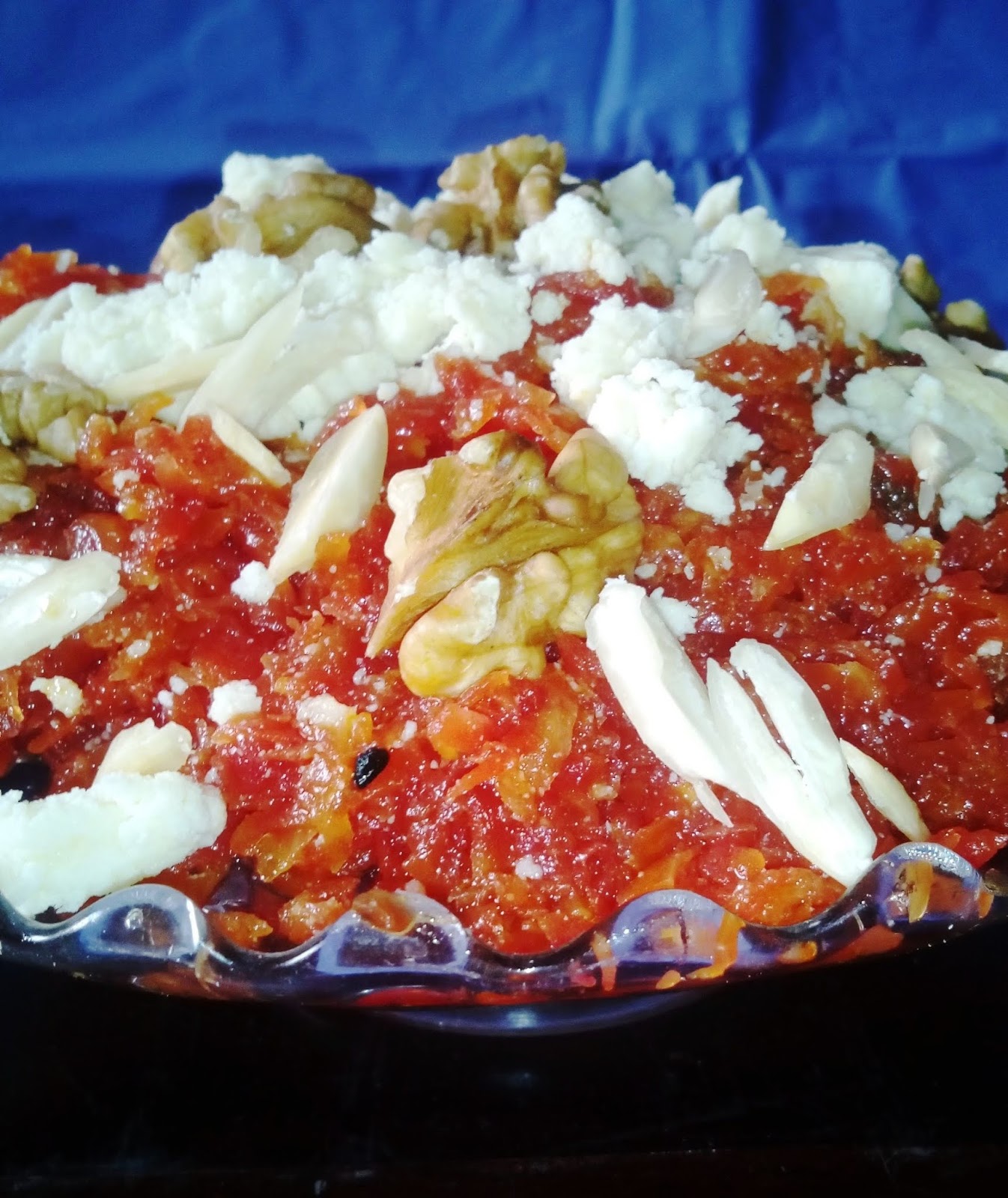
      • Take the lid off and sprinkle remaining Khoya on the surface and serve it hot or warm. 
       
     Our Gajar ka Halwa is ready to be served now. Enjoy it with family and friends. Try this recipe now without any FEAR OF FAILURE and send your comments so that any improvement, if needed, may be carried out.


Thank you,

Thine Eternally,
NOVICE


Thursday, 10 January 2019

BUSRI (A Traditional Winter Delight from Sindh)


BUSRI

A Traditional Winter Delight from Sindh


Busri 

Busri is an incredible but traditional recipe from Sindh, especially in rural areas and villages it is not only popular but very healthy sweet bread or Roti made with homemade Butter or Pure Desi Ghee. Though it can be made with any butter available over the counter, my experience tell that the aroma of homemade pure butter is something out of this world.

Despite a lot of efforts, I failed to find its history. As for as, my knowledge is concerned Busri is a traditional recipe of Sind and has been taken in breakfast since time immemorial. My parents and their parents enjoyed this delicacy and the recipe has been shared through generations.

Very simple in preparation, Only three ingredients are required to make this heavenly sweet Roti i.e. Butter (Preferably homemade) or Pure Desi Ghee, crushed Jaggery and plain wheat flour. 

It is not only fried in butter but the same is also inserted within two folds of roti which mixes in the melted jaggery within two folds of Roti like stuffed Paratha. The aroma of Butter is mind-boggling when mixes with crushed jaggery.

Unfortunately, this delicacy is limited in the rural areas of Sindh and due to the influx of fast food in urban areas, nobody has even tried to introduce Busri on a commercial basis. Its use is limited within the families themselves.

I hope this recipe will change the concept of rural food and maybe someday Busri will be on the Menu of restaurants and Snack outlets.

Let us start our very simple but incredible recipe of Busri with the name of ALLAH.


EQUATION:

  • Kneading and resting the Dough:                    30 minutes
  • Frying the Busri:                                            10 Minutes
  • Assembling:                                                   05 Minutes
  • Yield:                                                            2 Medium to large sized Busris
  • Cost:                                                             Rupees 300 for two (2 USDollars)                                                                                               


INGREDIENTS:

  1. 3 Cups Plain Wheat Flour
  2. 1 Cup Homemade & Pure Butter
  3. 1 Cup finely crushed Jaggery


METHOD:

  • Knead the plain wheat flour in the water like making normal bread and let it rest for 20-30 minutes.
  • Roll two rotis of the same size (bit thicker than normal Roti)
  • Finely crush the Jaggery
  • Now place one roti on a flat surface and sprinkle a lot of crushed jaggery over it.
  • place the 2nd Roti over the top of the first one and press the outer areas with the help of a fork or plain water.
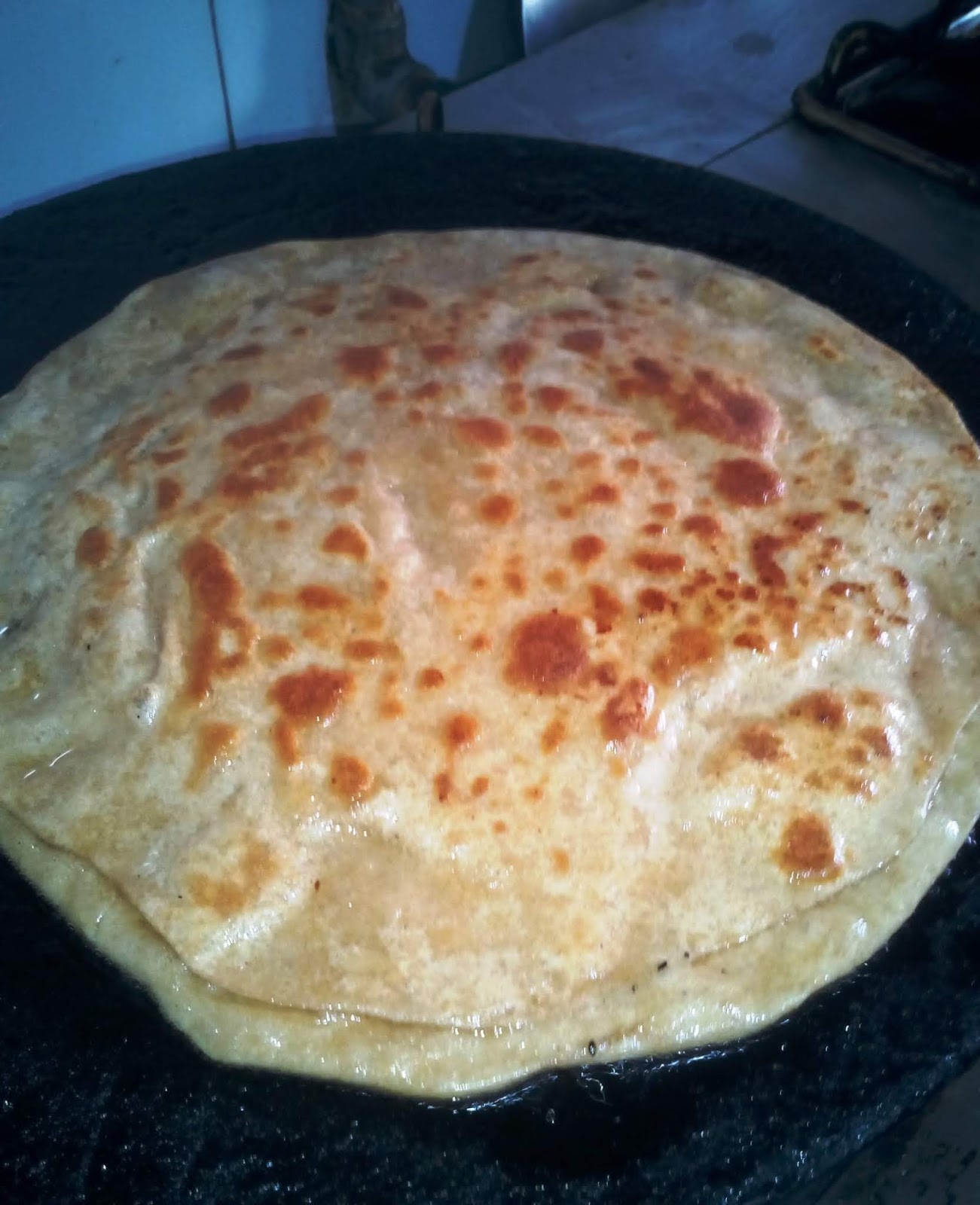
  • Heat the Tawa (Hot Plate) and put the Roti on it and fry on both sides for 2-3 minutes.
  • Put one Tablespoon of butter and fry it further till crispy on both sides.
  • Take it out and place it on a platter.
  • Now with the help of spoon make cuts in the top layer of Roti and put/insert blobs of Butter or Pure desi ghee in the cuts.
  • The Jaggery would have been melted now and mixing of Butter in it will turn it into a jaggery sauce.
  • Enjoy Hot at breakfast or night, especially during the winter season.
  • STEP BY STEP PICTURES ARE ATTACHED AS UNDER:


I am damn sure that this recipe will hit your taste buds like a storm and you'll be hooked to this incredible traditional Busri of Sindh. Enjoy it with family and friends without any FEAR OF FAILURE.


INSHA ALLAH our next recipe will be another Winter Delight
GAJAR KA HALWA.     

Thanks,


NOVICE

Friday, 4 January 2019

METHI KE PARATHAY


METHI KE PARATHAY

(FENUGREEK PARATHAY)


INTRODUCTION:

Methi (Fenugreek) is used as a Vegetable while in the fresh leafy form in the Sub-continent and is a household item. Its seeds are used in the preparation of pickle and in rural areas a hot drink is made from the seeds mixed with jaggery and water and served during cold winter nights to keep one warm and face the cold. My maternal grandma used to prepare this hot drink during winter days and it always made us feel warm and cozy. The dried leaves of Methi are used for aroma and flavor in different recipes both vegetarian and non-vegetarian. In Pakistan, there are many dishes made with Methi which are Methi Plak, Methi Aalu, Methi Qeema among a lot. 

Apart from its uses in food, the Methi is one of the most sought-after herbs for medicinal uses.

Methi (fenugreek) has been used in alternative and Chinese medicine to treat skin conditions and many other diseases for thousands of years.

It is also a common household spice due to its strong aroma and it is commonly used in the kitchens of the Sub-continent.

Methi Dana (Fenugreek seeds) and powder are also used in many Indian and Asian recipes for their nutritional profile and aroma.

It has benefits for various health conditions and has been used for all sorts of purposes in herbal medicine. However, modern science is just beginning to discover its true benefits.

Based on the available evidence, Methi has benefits for lowering blood sugar levels, boosting testosterone and increasing milk production in breastfeeding mothers, Lowering Cholesterol level, and other heart ailments as well as effective in clearing clogged blood vessels.

Nutrition Values:
One tablespoon of whole seeds contains 35 calories and several nutrients
·         Fiber: 3 grams.
·         Protein: 3 grams.
·         Carbs: 6 grams.
·         Fat: 1 gram.
·         Iron: 20% of your daily requirements.
·         Manganese: 7% of your daily requirements.
One of the most common reasons men use Methi supplements is to boost testosterone in Europe.
Some studies have found that it has beneficial effects, including increasing testosterone levels and boosting libido.
The most impressive research on fenugreek has analyzed how it affects metabolic conditions such as diabetes.
Health Benefits:
Methi has been used to treat a long list of diseases and conditions in alternative medicine.
However, many of these uses have not been studied well enough to reach strong conclusions.
Also, some reviews and anecdotal reports from traditional medicine suggest it can help with ulcer treatment, other skin conditions, and numerous illnesses.
Methi may also benefit cholesterol levels, lower inflammation and help with appetite control.

As I have mentioned above there are many different dishes prepared from methi Leaves not only for its aroma and taste but its health benefits as well. These Parathas are more suitable during the winter season and can be taken as a Gift of ALLAH.

before starting I must clarify here that I did not make these parathas but placed the recipe before my Wife, who diligently made the Parathas, and Vow, the recipe became her favorite as well. Now she is being asked time and again by neighbors, friends and even our own LAB RATS (my kids who approve or disapprove what is cooked) every new dish is placed before these LAB RATS. 


Let us start our Methe ke Parathay with the name of ALLAH.


EQUATION:

  • Mixing and Kneading of Dough:       15 minutes
  • Resting the dough:                         30 minutes
  • Frying:                                           Few more minutes
  • Yield:                                             10 Medium size Parathas
  • Expenses:                                       Rupees One Hundred 150 (little less than 1 US                                                           Dollar)


INGREDIENTS REQUIRED:

  1. 3 Cups Aata (Plain Flour)
  2. 3 Cups Maida (All Purpose Flour)
  3. 3 Tablespoons Oil
  4. 2 Tablespoons crushed and toasted Coriander seeds
  5. Salt to taste
  6. 1 Cup Methi leaves
  7. 3 Tablespoons fresh Corriander leaves
  8. Thinly sliced Green Chilies as per taste
  9. 3 Tablespoons Yogurt
  10. Water as per requirement


METHOD:

  • Mix all ingredients and knead with slightly warm water and rest it in the fridge
  • Take the dough out and make medium sized balls
  • Roll out the balls into medium-sized Roti and fry it in a pan with oil till crispy
  • Serve hot with Green Raita, Green Chutney, and Tomato Chutney, or any Sauce you like.


Viewers I hope these Parathas will take place on your dining table during this Winter and am sure you'll be hooked to it. Start a plan for preparation without any FEAR OF FAILURE.


thanks, 


NOVICE